
Liposomal Vitamin C
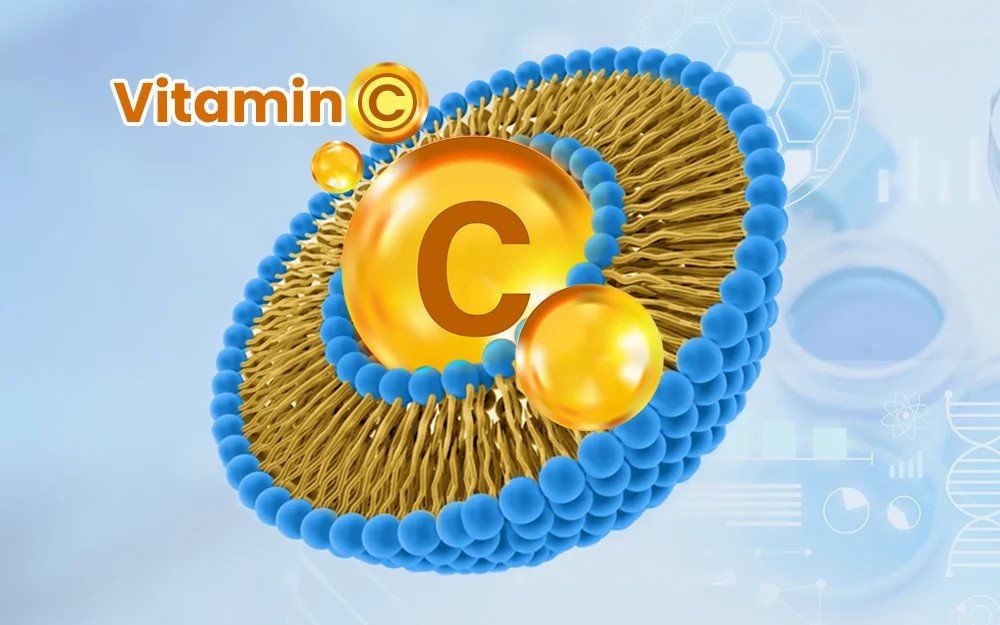
Vitamin C is universally essential yet fundamentally constrained by the body’s own intestinal biology. Standard ascorbic acid depends on SVCT1 transporters that saturate rapidly above two hundred milligrams per dose. Once saturation occurs, absorption efficiency drops sharply, and unabsorbed ascorbate accumulates inside the intestinal lumen. Osmotic accumulation draws water into the gut, triggering diarrhoea that makes high-dose supplementation impractical. Lipoedge solves this with pharmaceutical-grade liposomal Vitamin C engineered for membrane-mediated delivery. Phospholipid encapsulation bypasses SVCT saturation entirely by shifting uptake to endocytosis and membrane fusion pathways. This unlocks the full immune, antioxidant, and collagen-synthesis potential of Vitamin C at therapeutic concentrations.
- Nano-liposomal particle size: Lipoedge produces approximately 200 nm Vitamin C-loaded vesicles optimised for intestinal membrane interaction and efficient cellular uptake. Dynamic light scattering confirms consistent dimensional control across all production batches.
- pH-resilient colloidal stability: The formulation maintains a strongly negative zeta potential of –45.66 mV throughout the gastrointestinal environment. Strong electrostatic repulsion actively prevents vesicle aggregation under acidic gastric and intestinal pH conditions encountered during digestion.
- Controlled particle distribution: A polydispersity index of approximately 0.37 confirms a highly uniform liposome population across each manufactured batch. This consistency ensures predictable absorption kinetics and fully reproducible performance in downstream formulation applications.
- High Vitamin C entrapment: Encapsulation efficiency reaches 84.56%, verified by HPLC analysis across production batches. The phospholipid bilayer protects ascorbic acid from oxidative degradation, aqueous hydrolysis, and premature gastric release before intestinal absorption.
- Simulated gastrointestinal stability: Lipoedge formulation retains the majority of its Vitamin C content under pH 1.5 gastric conditions. Free ascorbic acid undergoes significant oxidative degradation under identical conditions, confirming the protective advantage of liposomal encapsulation.
- Vitamin C release profile: Intestinal fluid triggers controlled ascorbate release sustained across a six to eight-hour window. This extended release profile matches intestinal transit time and supports continuous systemic absorption rather than a single sharp peak.
- Cellular uptake (Caco-2 model): Liposomal delivery results in significantly higher intracellular Vitamin C concentrations in intestinal epithelial cell models. Phospholipid membrane fusion enables direct cytosolic ascorbate delivery, bypassing saturable SVCT transporter limitations.
- Transepithelial transport: Caco-2 permeability assays confirm substantially greater ascorbate transport compared to equivalent free ascorbic acid suspension. The prolonged absorption window spanning four hours demonstrates the extended bioavailability advantage that liposomal encapsulation consistently delivers.
- Antioxidant and leukocyte loading: Liposomal Vitamin C achieves higher plasma and leukocyte concentrations than standard oral ascorbic acid at equivalent doses. Immune cell loading is a validated clinical bioavailability marker, and liposomal delivery clearly demonstrates superior, sustained performance.
- Collagen synthesis pathway activation: Intracellular ascorbate delivery directly supports prolyl hydroxylase enzyme activity required for stable collagen triple-helix formation. This validates liposomal Vitamin C for wound-healing and dermal applications, where cytosolic concentrations are the rate-limiting factor.
Liposomal Vitamin C is available in a wide range of dosage formats suitable for both pharmaceutical and nutraceutical applications, offering flexibility for custom formulations.





| Attribute | Traditional Vitamin C | Liposomal Vitamin C |
|---|---|---|
| Bioavailability | Transporter-limited; declines sharply above 200 mg | Membrane-mediated uptake fully bypasses SVCT saturation ceiling |
| GI Tolerance | Osmotic diarrhoea at high doses | No osmotic load; superior gastrointestinal comfort at high doses |
| Oxidative Stability | Rapid degradation in an aqueous GI environment | Protected within the lipid bilayer from oxidative and hydrolytic degradation |
| Plasma Half-Life | Short; subject to rapid renal clearance | Extended plasma circulation via sustained controlled liposomal release |
| Dose Efficiency | High doses required for therapeutic plasma levels | Therapeutic concentrations are achieved at meaningfully lower administered doses |
- Superior absorption: Liposomal encapsulation shifts Vitamin C uptake from saturable SVCT transporters to membrane fusion and endocytosis pathways entirely. This removes the pharmacokinetic dose ceiling that prevents standard ascorbic acid from achieving therapeutic systemic plasma concentrations.
- Exceptional gastrointestinal comfort: Liposomal delivery eliminates the unabsorbed ascorbate osmotic load responsible for high-dose diarrhoea and gastric distress. This enables effective therapeutic and premium supplement formulations when standard Vitamin C consistently fails to meet tolerability requirements.
- Sustained plasma and immune cell delivery: Controlled-release kinetics provide an extended plasma half-life and superior leukocyte loading compared with standard oral ascorbic acid. This sustained intracellular presence is clinically critical for immune defence and antioxidant protection applications.
- Direct intracellular delivery: Phospholipid vesicles fuse with cell membranes to release ascorbate directly into the cytosol. This bypasses extracellular barriers and maximises the intracellular concentrations required for collagen synthesis and antioxidant enzyme cofactor activity.
- Collagen synthesis: Cytosolic ascorbate directly cofactors prolyl and lysyl hydroxylases, which stabilise the collagen triple helix. Liposomal delivery achieves intracellular concentrations required for clinically meaningful connective tissue repair and support of skin integrity.
- Formulation versatility: Compatible with powders, granular powders, capsules, liquid dispersions, shots, and topical emulsion formats. Available as L-Ascorbic Acid, Sodium Ascorbate for sensitive-stomach formulations, or Calcium Ascorbate for combination mineral supplement applications.
Lipoedge Liposomal Vitamin C meets WHO-GMP and ISO standards for pharmaceutical-grade manufacturing applications.
| Key Quality Parameter | Formulation Advantage |
|---|---|
| Encapsulation Efficiency (84.56%) | Maximises ascorbate payload and prevents oxidative degradation throughout the entire shelf life |
| Superior Morphology | Uniform spherical ~200 nm vesicles ensure consistent blending and reproducible cellular uptake |
| Assay Verification (HPLC & FTIR) | Confirms stable ascorbic acid incorporation without any measurable molecular degradation |
| Thermal Stability | Active assay maintained at ~70.5% under accelerated 40°C and 75% RH conditions |
| Moisture Control (LOD <5%) | Non-hygroscopic physical stability ensures long-term powder integrity under recommended storage conditions |
- Immune system support: High-dose immune therapy for respiratory infections requires plasma Vitamin C concentrations unachievable with standard oral ascorbic acid supplementation. Liposomal delivery enables therapeutic plasma levels without intravenous administration or the gastrointestinal intolerance that limits standard options.
- Adjunct therapy for high-dose clinical requirements: Clinical protocols for oncology supportive care and post-infectious recovery require sustained elevated plasma Vitamin C concentrations. Oral liposomal delivery enables these concentrations to be achieved where intravenous administration is clinically impractical or patient preference restricted.
- Wound healing and post-surgical recovery: Rapid collagen synthesis demands high intracellular ascorbate availability at the site of active tissue repair. Liposomal delivery supports prolyl hydroxylase cofactor activity directly in the cytosol, without causing gastric distress in post-operative patients.
- Metabolic and cardiovascular adjunct: Ascorbate participates in carnitine biosynthesis and in the regulation of endothelial nitric oxide, both critical to cardiovascular metabolic function. Sustained plasma levels via liposomal delivery support metabolic and vascular health formulations at concentrations standard ascorbic acid cannot maintain.
- Immune supplement differentiation: Clean-label capsules and tablets targeting genuine immune efficacy differentiate on demonstrable liposomal bioavailability data versus commodity ascorbic acid. Confirmed plasma concentration advantages provide the scientific basis for premium market positioning and substantiated regulatory claims.
- Liquid dispersions and functional shots: Liposomal Vitamin C powder disperses uniformly in aqueous formats where standard ascorbic acid rapidly oxidises and loses potency. This enables stable, high-potency Vitamin C in syrups, wellness shots, and functional beverages without stability compromise.
- Sports nutrition and recovery formulations: Exercise-induced oxidative stress requires sustained antioxidant availability throughout the critical post-exercise cellular recovery window. Liposomal delivery provides extended plasma half-life and muscle cell loading that the rapid renal clearance of standard ascorbic acid prevents.
- Sensitive populations and children’s supplements: Sodium Ascorbate customisation combined with superior gastrointestinal comfort enables high-dose Vitamin C formulations suitable for paediatric populations. Elderly and GI-sensitive consumer segments benefit equally from the tolerability profile liposomal encapsulation delivers.
- Advanced nutri-cosmetic and beauty-from-within formulations: Oral liposomal Vitamin C delivers ascorbate intact to dermal layers, supporting collagen synthesis and melanin regulation at the cellular level. Superior bioavailability substantiates skin brightening and structural anti-ageing efficacy claims with genuine dermal delivery evidence.
- Topical delivery for serums and creams: The phospholipid matrix mimics the skin’s natural lipid bilayer, enabling deeper transdermal penetration than water-soluble ascorbic acid achieves. This supports premium anti-ageing and hyperpigmentation formulations with validated delivery to the target dermal cell type.
- UV protection and antioxidant defence: Liposomal ascorbate within skin cells provides intracellular antioxidant protection against UV-induced reactive oxygen species and lipid peroxidation. This substantiates photoprotective claims in premium SPF-adjunct, post-sun, and environmental defence formulation categories.
- Skin brightening and tone correction: Efficient cellular uptake delivers ascorbate directly to melanocytes, where it modulates tyrosinase activity and regulates melanin production. This enables validated hyperpigmentation and skin-tone correction formulations with confirmed delivery to the precise target cell type.
Ascorbic acid relies on SVCT1 and SVCT2 intestinal transporters that saturate rapidly above approximately 200 mg per dose. Beyond this threshold, absorption drops sharply, and unabsorbed ascorbate creates an osmotic load, causing diarrhoea and gastric discomfort.
Phytosomes bind ascorbic acid to phosphatidylcholine for a modest and limited bioavailability improvement over standard forms. Lipoedge encapsulates within sealed bilayer vesicles, delivering ascorbate cytosolicly via membrane fusion, achieving superior stability, controlled release, and confirmed intracellular delivery.
Full physicochemical characterisation, batch Certificates of Analysis, and stability data are provided. WHO-GMP compliance documentation, including support for FSSAI, EU Novel Food, and US NDI regulatory notification processes, is available.
Standard high-dose Vitamin C leaves large quantities of unabsorbed ascorbic acid in the intestinal lumen, causing osmotic diarrhoea. Liposomal encapsulation delivers ascorbate via membrane pathways, eliminating the osmotic load and enabling well-tolerated high-dose therapeutic formulations.
Yes. Standard L-Ascorbic Acid, Sodium Ascorbate for sensitive-stomach formulations, or Calcium Ascorbate for mineral-combination products are all available. Compatible with co-encapsulation of complementary actives, including zinc, glutathione, and bioflavonoids, across powder and granular powder formats.
Non-GMO sunflower or soy phospholipids are used with no animal-derived excipients present in the formulation. Vegan-compatible, allergen-screened, and free from synthetic solvent residues for premium clean-label market positioning across all formats.