
Why In Vitro Biological Testing Matters
In vitro biological testing bridges the gap between the lab and the mammalian cells by showing exactly how liposomes interact with live cells. By mimicking real physiological conditions, these studies provide crucial data on cellular safety, intracellular absorption, and molecular efficacy. This essential screening serves as a strategic roadmap, providing clear guidelines to determine whether a product is fully optimised and ready to advance to further in vivo studies and subsequent human consumption.
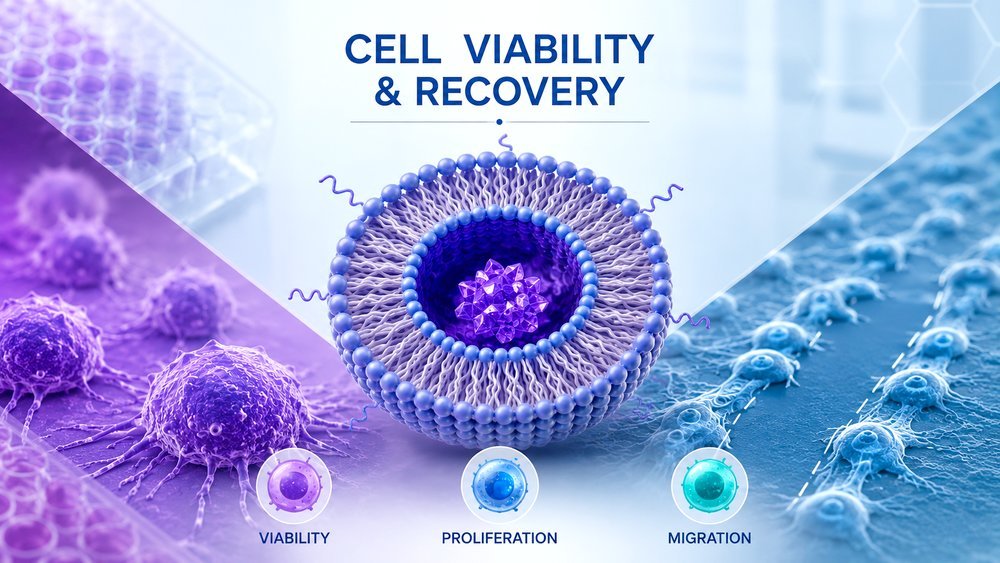
In vitro cytotoxicity & Biocompatibility
-
Cell viability Study (MTT)
Evaluation of cell viability in standard cell lines (L929, CHO, HepG2) as per ISO 10993-5, when exposed to liposomal API
-
Cell Proliferation & Migration Study
Correlating colony-formation (proliferation) and wound-healing assays (migration) to validate cytotoxicity and cell recovery behaviour.
-
Hemocompatibility Assay:
Evaluation using fresh human blood to determine RBC compatibility, with ≤ 5% hemolysis considered acceptable.
-
Osmotic Fragility Analysis:
This study measures the structural resistance of red blood cells to hemolytic shock (bursting) when exposed to varying osmotic stresses in the presence of our liposomes.
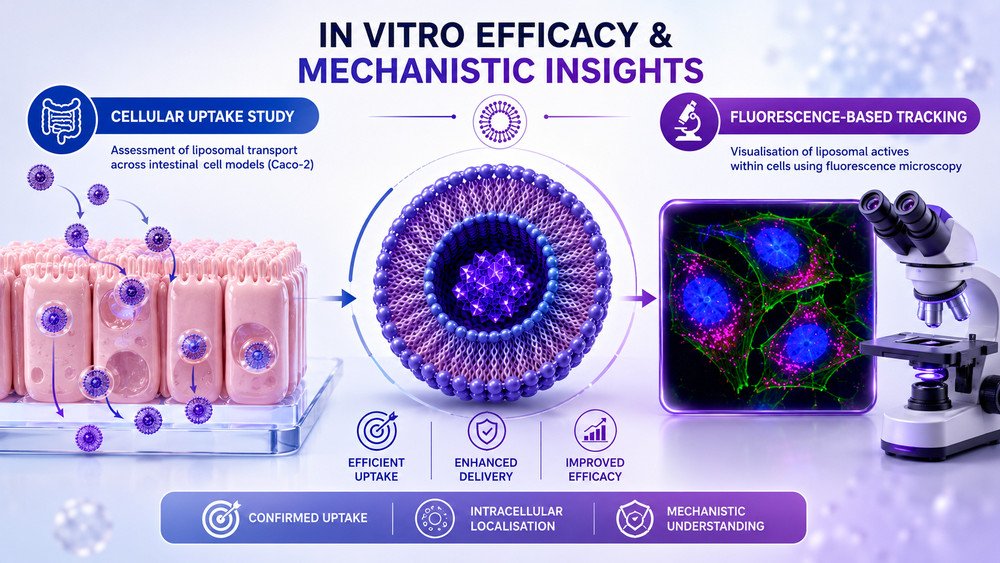
In Vitro Efficacy & Mechanistic Insights
-
Cellular Uptake Study
Assessment of liposomal transport and absorption across intestinal cell models (Caco-2).
-
Fluorescence-Based Tracking
Visualisation of liposomal actives within cells using fluorescence microscopy.
-
Mitochondrial Function Assessment
Evaluation of mitochondrial membrane potential using JC-1 dye to determine the liposome’s impact on cellular energy and health.
-
Endocytic Pathway Inhibition
Identification of the precise cellular entry mechanisms (e.g., clathrin- or caveolae-mediated endocytosis) using targeted chemical blockers.
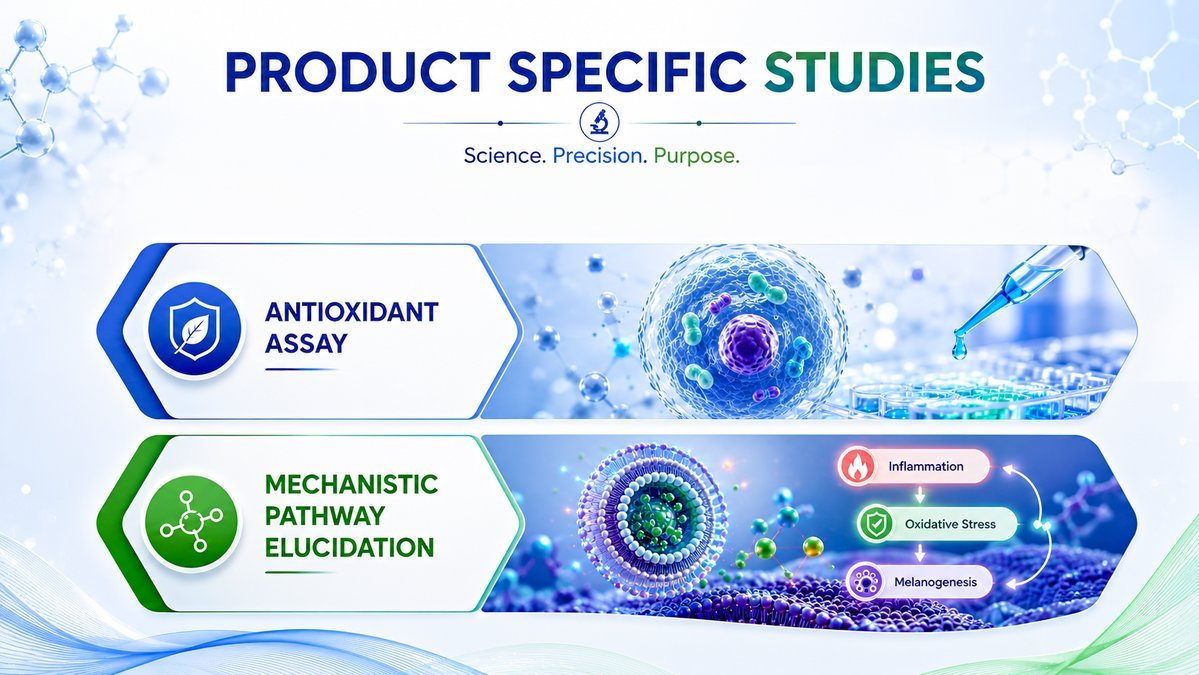
Product Specific Studies
-
Antioxidant Assay
Product-specific cellular assays (such as DCFH-DA fluorometric staining) to measure the formulation’s direct impact on the intracellular health to combat oxidative stress.
-
Mechanistic Pathway Elucidation
Using ELISA-based assays to elucidate product-specific molecular signaling pathways on how liposomal formulations mitigate cellular inflammation, oxidative stress, melanogenesis, etc.
-
Antimicrobial Assay
Evaluation of the minimum inhibitory concentration (MIC) to confirm the liposome’s potency against target bacterial or fungal strains.
-
Anticancer Activity Evaluation
In vitro cellular assays evaluating antiproliferative potential, apoptosis induction, and underlying antitumor mechanisms of liposomal APIs.
Product-Specific Documentation We Provide
The actual data sheets from our cell-culture testing, providing the product’s absorption rates, efficacy and cellular safety.
Deliver high-impact visual and scientific evidence of your formulation’s transport efficacy, backed by real-time fluorescence tracking.
Validate your premium product claims with definitive data on intracellular biological assays tailored to your unique formulation, providing undeniable scientific proof of its efficacy.
In Vitro Performance & Methodology Troubleshooting
Demonstrate efficient intracellular delivery and uptake of liposomal actives using cultured mammalian cell models.
Assessing comprehensive cytotoxicity and cellular compatibility before advancing product development.
To measure biological responses such as antioxidant, anti-inflammatory, or targeted cellular effects to confirm product performance.
Comparing multiple formulations and compositions to accelerate selection of the most effective product candidate.
In Vitro Evaluation & Bioefficacy Workflow
Selecting appropriate cell lines (such as L929, CHO, Caco-2) and tailoring assay protocols to align with your specific product category and ISO guidelines.
Executing MTT cell viability, cell migration, and fresh human blood hemocompatibility tests to ensure complete cellular safety and red blood cell protection.
Visualizing cellular uptake using fluorescence microscopy and mapping molecular signaling pathways via ELISA to verify successful uptake and functional efficacy of the active ingredient.
Preparing the final technical dossier, complete with scientific charts for regulatory submission.
Why choose Lipoedge for cellular & in vitro testing
Seamless execution from experimental design to data interpretation, ensuring alignment between formulation, cellular response, and analytical outputs.
All-in-one capabilities for safety, absorption, blood compatibility, and functional testing, all backed by state-of-the-art laboratory infrastructure.
Experiments are structured in line with ISO guidelines and globally accepted methodologies to support safety, efficacy, and compliance requirements.
Tailored assay selection, protocol optimisation, and comparative evaluation based on dosage form, application, and target market.
Backed by a team of highly qualified scientists, forming the foundation of the department and ensuring robust, reproducible, and insightful outcomes.
Comprehensive solutions covering study planning, execution, troubleshooting, and documentation for liposomal systems.
How Can We Support
Your Goals?
Choose the path that fits your needs — from analytical testing to fully bespoke liposomal formulation design.
Elevate Your Formulation Testing
Validate how your liposomes interact with live cellular systems to ensure unparalleled safety, absorption, and molecular efficacy before advancing to human consumption.
- Establish Certified Cellular Safety
- Track Intracellular Uptake Kinetics
- Decode Molecular Functional Impact
Troubleshoot Bio-Performance Challenges
Eliminate biological testing anomalies and refine your experimental protocols to secure flawless, reproducible safety and uptake data.
- Resolve Cellular Uptake Inconsistencies
- Fix Functional Assay Anomalies
- Correct Imaging & Data Artifacts
Download Our Capabilities Brochure
Access the ultimate biological validation playbook to streamline your cellular testing pipeline and back your consumer-facing product claims with undeniable data.
- Biocompatibility Screening Blueprints
- End-to-End Bioefficacy Validation Protocol
- Product-Specific Intracellular Efficacy Assays
Cytotoxicity testing evaluates cell viability across standard cell lines to determine safe exposure levels. It supports formulation safety assessment and aligns with ISO 10993 guidelines for biological evaluation.
Cellular uptake studies determine how efficiently liposomes are absorbed and transported across biological barriers. They also confirm intracellular delivery and release of encapsulated actives within target cells.
Liposomal formulations are evaluated using cell-based disease models to assess biological response and functional activity. Comparative studies with non-liposomal actives help establish relative performance and effectiveness.
LipoEdge performs hemolysis and osmotic fragility studies using human blood to evaluate red blood cell compatibility. Testing is conducted at relevant concentrations to ensure accurate safety profiling under real-use conditions.
Liposomal formulations are evaluated using cell-based disease models to assess biological response and functional activity. Comparative studies with non-liposomal actives help establish relative performance and effectiveness.
We establish a versatile range of cell-based models to measure exactly how the liposomal product combat oxidative stress, fight microbes, or regulate cellular pathways. Every assay is tailored directly to the formulation’s target applications.