How Liposomal Formulations Enhance Bioavailability & Stability
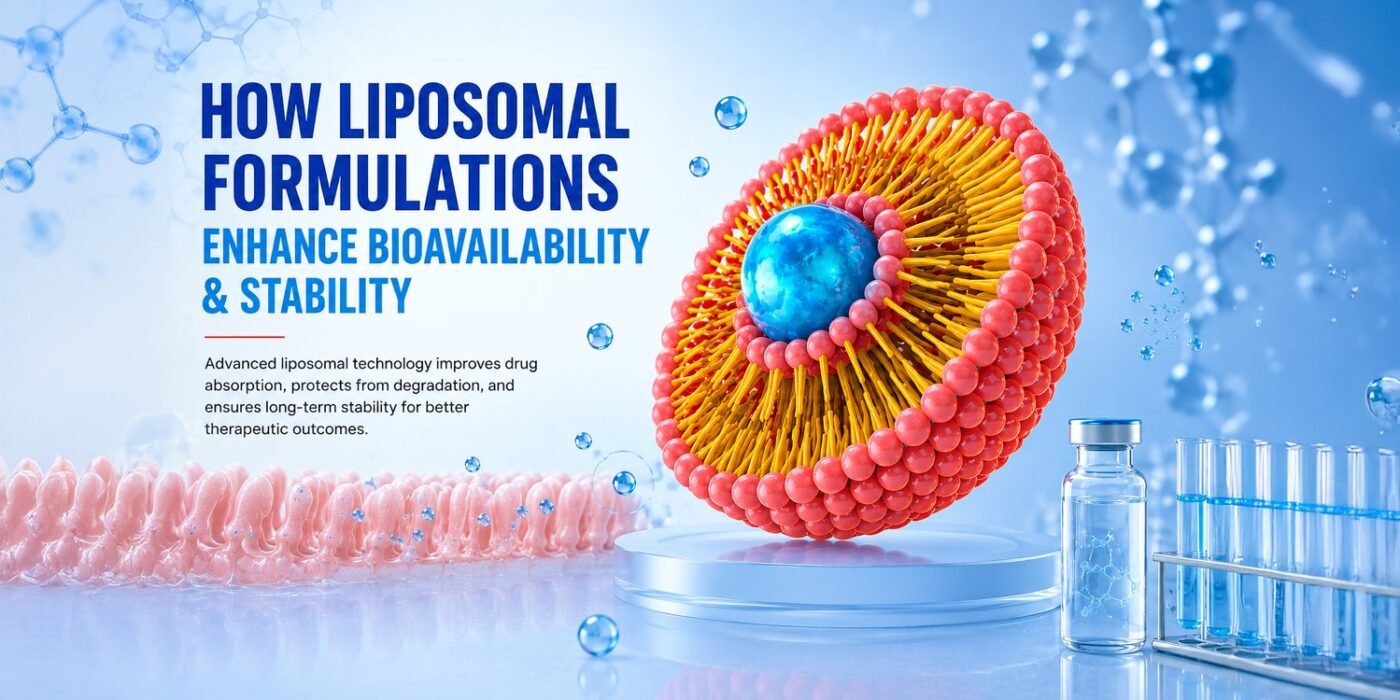
The pharmaceutical industry’s evolution increasingly demands sophisticated delivery systems that overcome traditional bioavailability limitations while ensuring therapeutic efficacy. Formulators face persistent challenges with poorly soluble compounds, where conventional approaches often fail to achieve adequate plasma concentrations. Understanding that these obstacles can significantly impact patient outcomes, innovative liposomal formulation technology emerges as a transformative solution for enhanced drug delivery. Advanced phospholipid-based systems demonstrate remarkable improvements in stability, targeting precision, and therapeutic performance across diverse applications.
In this blog, we examine how liposomal formulations systematically enhance bioavailability and stability to support successful pharmaceutical development.
Key Takeaways
- Liposomal encapsulation delivers 2-10x improvements in bioavailability through enhanced cellular uptake and protection mechanisms.
- Advanced stability optimisation achieves >1 year shelf life through controlled storage and formulation strategies.
- Manufacturing scalability requires GMP compliance and regulatory approval for successful commercial development.
Quick Answer: Liposomal formulations enhance bioavailability and stability through phospholipid encapsulation, protecting drugs from degradation while improving cellular uptake and extending circulation times significantly.
Fundamental Mechanisms of Liposomal Bioavailability Enhancement
Liposomal formulation technology addresses fundamental absorption limitations through sophisticated phospholipid-mediated delivery mechanisms that systematically overcome traditional bioavailability barriers.
Here are some of the mechanisms to enhance liposomal bioavailability:
- These protective lipid structures shield drugs from premature breakdown while maintaining therapeutic integrity throughout intestinal transit. Research demonstrates that liposomal Jaspine B achieved a two-fold increase in systemic exposure (AUC0-∞) from 56.8 ± 12.3 ng·h/mL to 139.7 ± 27.2 ng·h/mL [1].
- Liposomal particles demonstrate superior intestinal absorption due to their biomembrane compatibility and optimised particle size. Studies show that lipid-based formulations achieve 1.99-fold greater ex vivo permeability through the rat intestine than traditional suspensions.
- Clinical pharmacokinetic studies consistently demonstrate superior plasma concentrations and extended circulation times. Research reveals that encapsulation within phosphatidylcholine-rich bilayers improved Caco-2 trans-epithelial transport by 2- to 10-fold compared with conventional controls.
- Liposomal systems exhibit extended half-life, with studies showing half-life increases from 7.9 ± 2.3 hours to 26.7 ± 7.3 hours. This prolonged circulation enables greater therapeutic efficacy with reduced dosing frequency.
- Particle size optimisation between 10 and 100 nm ensures optimal surface-to-volume ratios, enhancing cellular interactions and absorption efficiency.
While enhanced nutrient bioavailability demonstrates therapeutic potential, maintaining formulation stability becomes paramount for sustained clinical effectiveness.
Lipid-Based Formulations for Poorly Soluble Drug Delivery
Lipid-based delivery systems provide comprehensive solutions for BCS Class II compounds, where traditional formulation approaches fail to achieve therapeutic plasma concentrations due to dissolution-limited absorption.
- Solubilization Enhancement: Type IV lipid formulations improve the solubility of challenging compounds through sophisticated surfactant systems. Research shows that Tadalafil solubility increased to 48.33 ± 0.004 mg/mL with optimised co-surfactant combinations, compared to minimal water solubility, enabling therapeutic doses to be delivered in practical dosage forms.
- Dissolution Rate Acceleration: Lipid-based systems bypass dissolution-limiting steps through pre-dissolved drug presentation and enhanced wetting properties. Studies demonstrate over 95% dissolution within 5 minutes for optimised lipid formulations, compared with extended dissolution profiles for conventional formulations.
- Supersaturation Maintenance: Advanced formulations maintain drug compounds in supersaturated states throughout gastrointestinal transit, preventing precipitation that can otherwise limit absorption. Liposomal formulation technology maintains elevated concentrations during digestion while minimising enzymatic degradation of the delivery components.
- Bioavailability Amplification: Clinical studies show substantial improvements in bioavailability through lipid-mediated absorption mechanisms. Research demonstrates that risperidone bioavailability increased significantly, with AUC values reaching 1441.711 μg·h/mL, compared with 321.011 μg·h/mL for conventional tablets, representing a nearly 4.5-fold increase with liquisolid technology.
- Lymphatic Transport Optimisation: Poorly soluble drugs achieve enhanced intestinal lymphatic absorption, targeting and circumventing hepatic first-pass metabolism. This pathway provides sustained plasma concentrations and improved tissue distribution for lipophilic therapeutic compounds requiring enhanced systemic exposure.
Once the potential of a liposomal formulation is demonstrated, ensuring long-term stability becomes the decisive factor for commercial success.
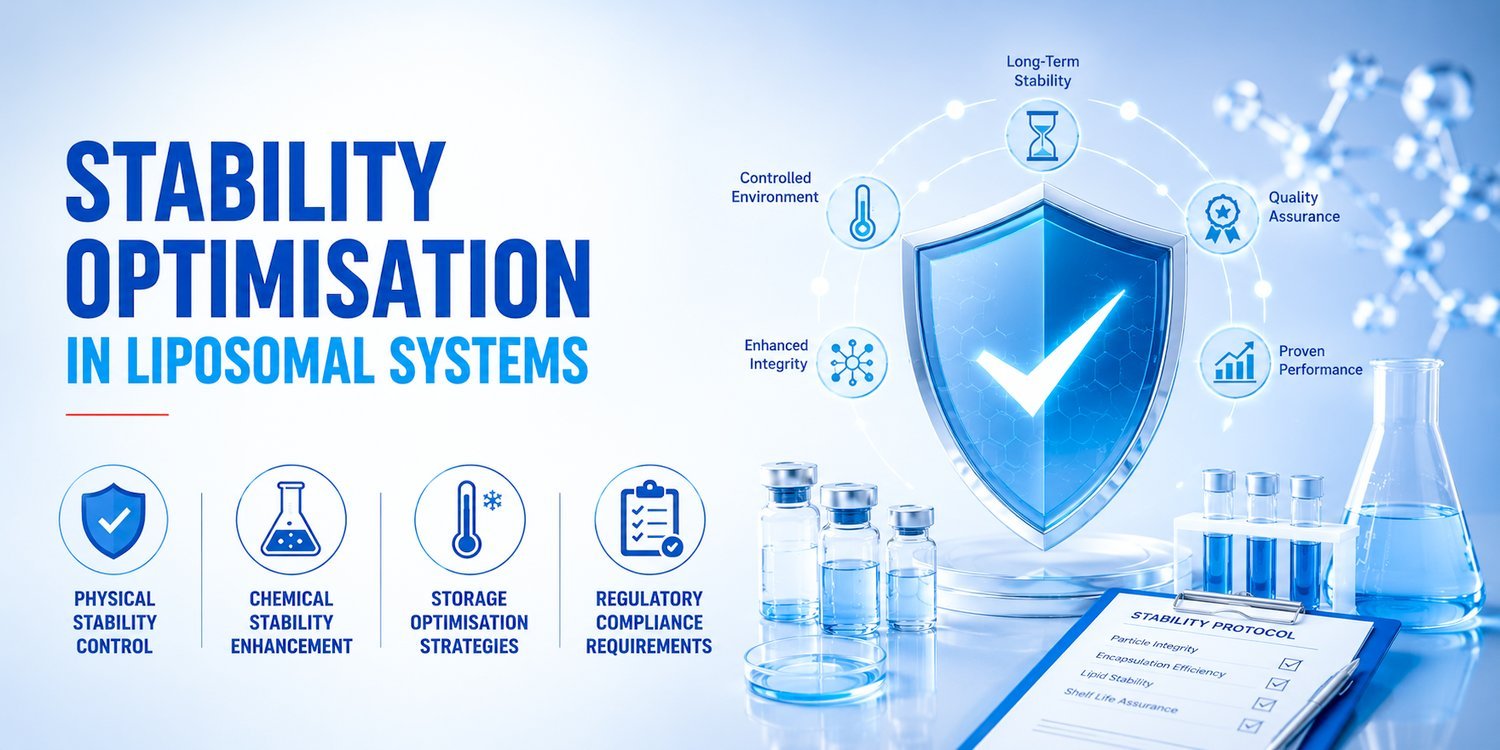
Stability Optimisation in Liposomal Systems
Comprehensive stability management in liposomal formulations requires systematic control of physical, chemical, and biological degradation pathways to achieve pharmaceutical-grade shelf life and therapeutic consistency.
Here are some of the considerations for stability optimisations within liposomal systems:
Physical Stability Control
Research demonstrates that extruded liposomes initially maintain an average size of 60±30 nm, but formulations without stabilisers show significant size increases after 12 months of storage, highlighting the critical need for protective strategies. Electrostatic and steric stabilisation mechanisms prevent vesicle fusion by controlling surface charge modification and by polymer coating systems that maintain colloidal stability.
-
Chemical Stability Enhancement
Antioxidants, cholesterol incorporation, and protective atmospheres significantly reduce lipid degradation rates during long-term storage. Most marketed liquid liposomal products require refrigerated storage at 2-8°C to maintain chemical stability, with critical quality attributes including drug loading retention and monitoring of phospholipid membrane integrity.
-
Storage Optimisation Strategies
Temperature control, light protection, and atmospheric management provide essential environmental parameters for achieving extended shelf life. Freeze-drying with appropriate cryoprotectants enables long-term storage while preserving vesicle structure and encapsulation efficiency.
-
Regulatory Compliance Requirements
Quality control protocols and analytical validation ensure that stability data meet pharmaceutical regulatory standards for commercial approval pathways. Pharmaceutical liposomal products typically require demonstrated shelf lives of more than 1 year for commercial viability.
The transition from optimised laboratory formulations to commercially viable products hinges on addressing the challenges of sophisticated manufacturing scale-up and stringent regulatory requirements.
Functions of Lipids in Advanced Drug Delivery Systems
Lipid components within delivery systems fulfil distinct structural, functional, and targeting roles that determine therapeutic efficacy, membrane stability, and biological compatibility through precisely controlled molecular interactions.
- Phospholipids possess amphiphilic properties with hydrophilic head groups and hydrophobic tails that form ordered bilayer structures, creating compartmentalised environments for both hydrophilic and lipophilic therapeutic compounds through sophisticated molecular organisation.
- Cholesterol incorporation provides essential membrane stability and permeability control through lipid condensing effects and phase behaviour modification. Research demonstrates cholesterol thickens membranes, decreases permeability, and brings lipids into well-ordered domains while maintaining lateral mobility.
- Clinical studies show PEGylated Doxil liposomes achieve a 72-hour drug half-life and a 36-hour circulation half-life, increasing bioavailability 90-fold compared to free drug, demonstrating substantial therapeutic advantage through enhanced pharmacokinetic profiles.
- Ionizable Lipids for pH-Responsive Delivery: Charged lipids enable pH-dependent drug release and facilitate cellular uptake via electrostatic interactions and membrane fusion. These components provide controlled drug release in specific physiological environments while enhancing endosomal escape capabilities for intracellular delivery applications.
- Specialised lipid anchors enable attachment of targeting molecules for tissue-specific delivery and enhanced therapeutic selectivity. Surface-modified lipids facilitate receptor-mediated endocytosis and active targeting mechanisms, improving drug concentration at disease sites while minimising systemic toxicity through selective cellular recognition pathways.
Beyond formulation science, the pathway from laboratory innovation to commercial success requires mastering complex manufacturing and regulatory challenges.
Manufacturing Scalability and Regulatory Considerations
Transitioning liposomal formulations from the laboratory to commercial manufacturing poses sophisticated challenges that require process control and equipment validation strategies. FDA and EMA authorities emphasise that small changes to liposome manufacturing processes can significantly influence end-product performance. Modern, scalable systems utilise ethanol injection techniques to achieve consistent particle distribution.
Companies like West Bengal Chemical Industries Limited, developing LipoEdge products, demonstrate best practices through WHO-GMP certifications. Regulatory pathways require extensive documentation encompassing chemistry, manufacturing, and controls, along with stability studies. The global liposomal market is projected to grow at 13.2% annually, reaching $6,993 million by 2027, validating its commercial viability.
Final Thoughts
The advancement of liposomal formulation science represents a paradigm shift in addressing the most persistent challenges in pharmaceutical development. Successful implementation requires understanding fundamental encapsulation mechanisms, optimising stability parameters, and establishing robust manufacturing processes that ensure regulatory compliance. Forward-thinking pharmaceutical companies must invest in comprehensive technology platforms that integrate formulation expertise, quality systems, and global regulatory knowledge.
The evidence clearly demonstrates that organisations prioritising these sophisticated delivery systems position themselves advantageously for future market success. Companies like West Bengal Chemical Industries Limited, through platforms such as LipoEdge, exemplify how comprehensive technology transfer enables the transformation of innovative concepts into commercially viable products meeting international standards.
References
- Ghimire B, Giri P, Mateen S, Pashikanti S, Aghazadeh-Habashi A. Comparative Bioavailability Study of Jaspine B: Impact of Nanoliposomal Drug Delivery System on Pharmacokinetics. Pharmaceutics. 2025 Jun 22;17(7):807. doi: 10.3390/pharmaceutics17070807. PMID: 40733017; PMCID: PMC12299947.
- Husuzade G, Demiralp B, Nazlı H, Boran T, Güngör S. Comprehensive Analytical Studies on the Solubility and Dissolution Rate Enhancement of Tadalafil with Type IV Lipid Formulations. Pharmaceutics. 2025 Nov 7;17(11):1436. doi: 10.3390/pharmaceutics17111436. PMID: 41304774; PMCID: PMC12655114.
- Patel, D., Solanki, J., Kher, M.M. and Aharon Azagury (2024). A Review: Surface Engineering of Lipid‐Based Drug Delivery Systems. Small.
Liposomal delivery systems demonstrate 2-10x increases in bioavailability through enhanced cellular uptake mechanisms. Clinical studies show liposomal vitamin C achieves 55% higher serum concentrations than traditional formulations within two hours of administration.
Phospholipids provide bilayer formation for drug encapsulation while cholesterol modulates membrane fluidity. PEGylation creates stealth properties extending circulation to 36 hours. Ionizable lipids facilitate pH-responsive release and cellular uptake mechanisms effectively.
Liposomal products require extensive documentation encompassing chemistry, manufacturing, and controls, as well as stability studies. FDA guidance specifies that these complex formulations need prior approval supplements for any formulation or manufacturing process changes throughout development.
Optimised liposomal formulations achieve shelf lives exceeding one year through controlled storage at 2-8°C and stabilisation strategies. Freeze-drying with cryoprotectants preserves vesicle structure while maintaining only 4% drug loss over extended periods.
Scale-up requires sophisticated process control to maintain consistent particle size distribution and encapsulation efficiency across production volumes. Modern ethanol injection systems achieve reproducible results by controlling key parameters while meeting GMP compliance requirements.